
Sumatra 2027
The Gone Wild Approach
This page covers everything you need to know before committing to this trip — where we're going, what we're doing each day, and how it's all structured.
It also explains the ethical framework behind every decision, from the guides we work with in Sumatra to how we show up in the Mentawai Islands. Read it properly before you sign up. This trip is deliberately small, deliberately slow, and built around doing it right.
Where we are going:
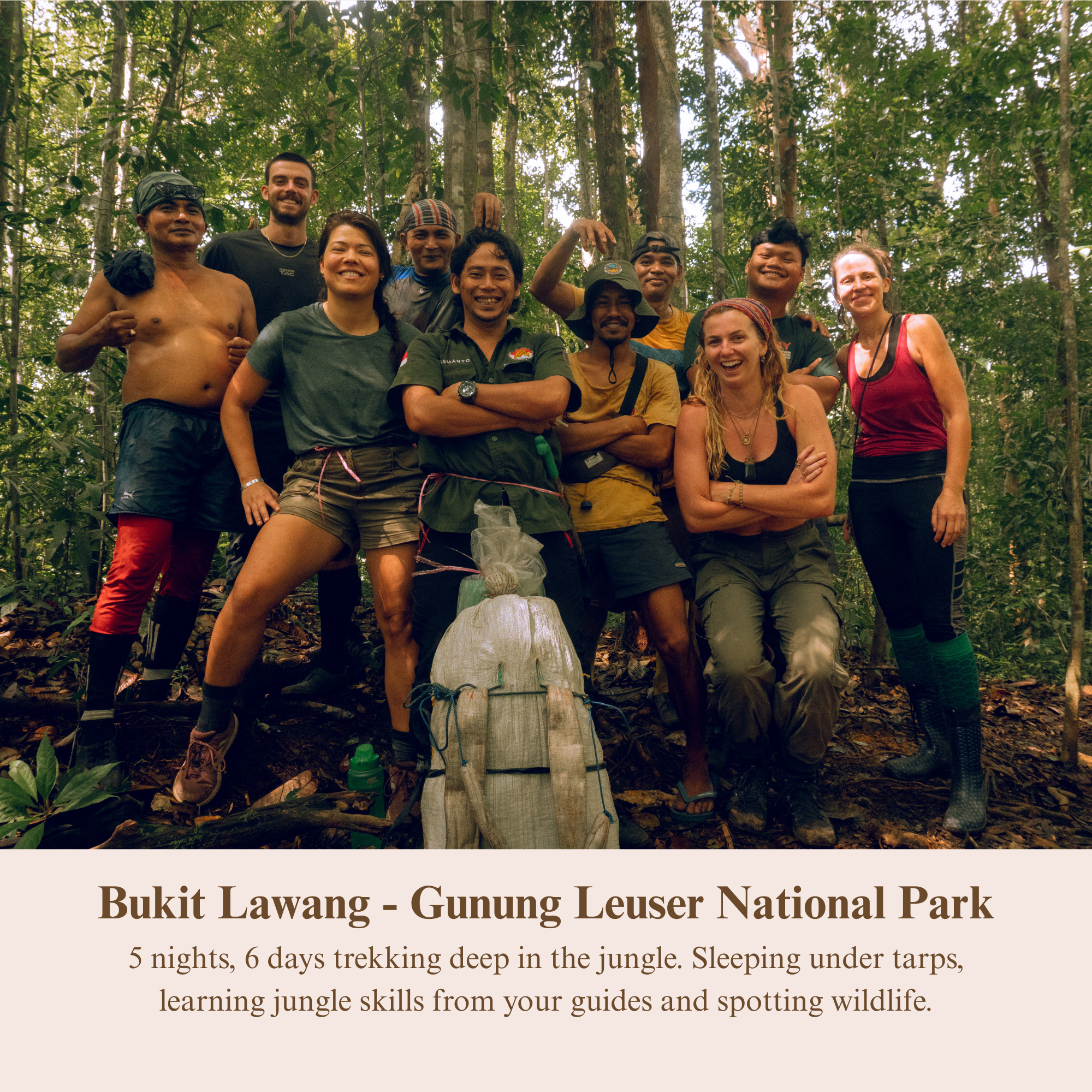
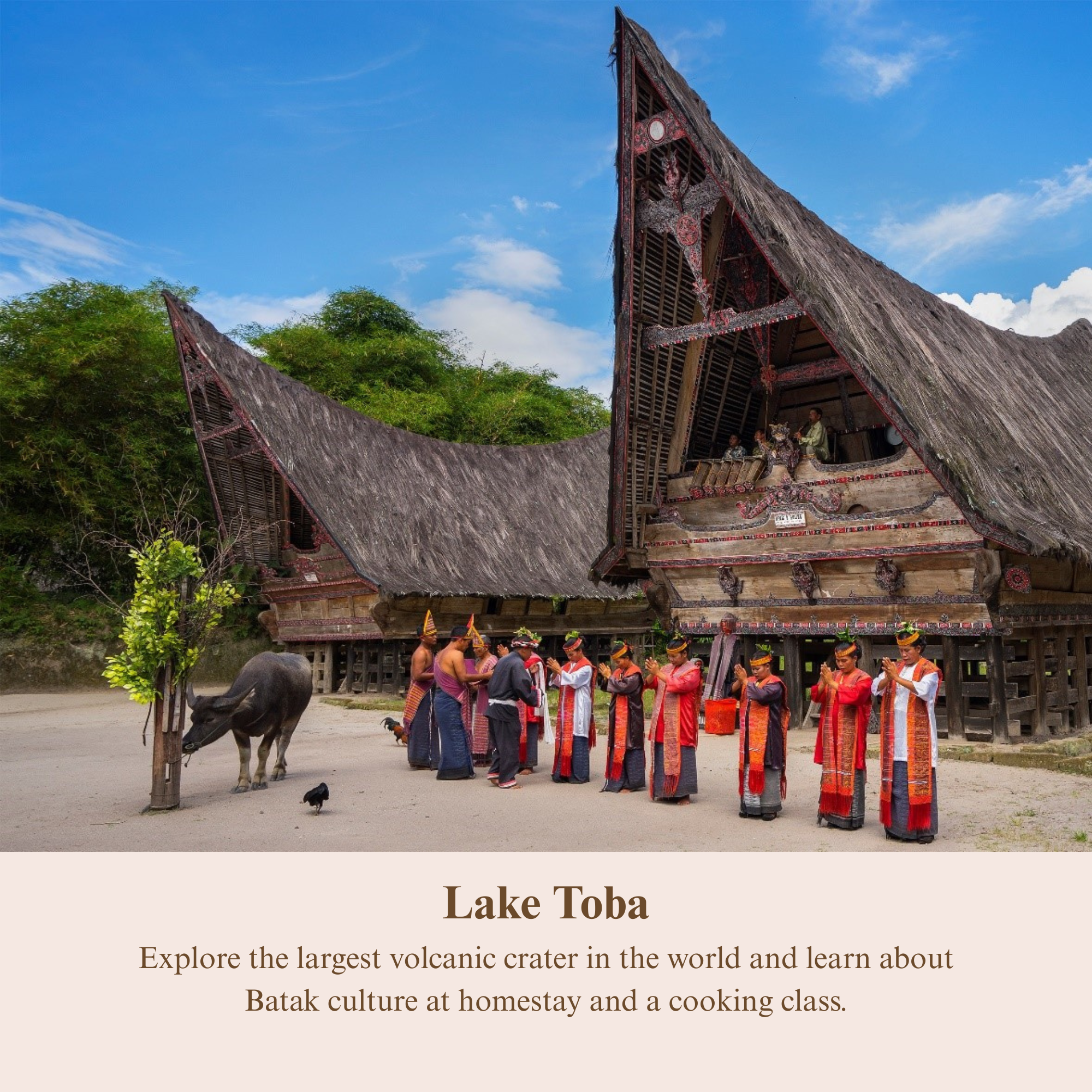
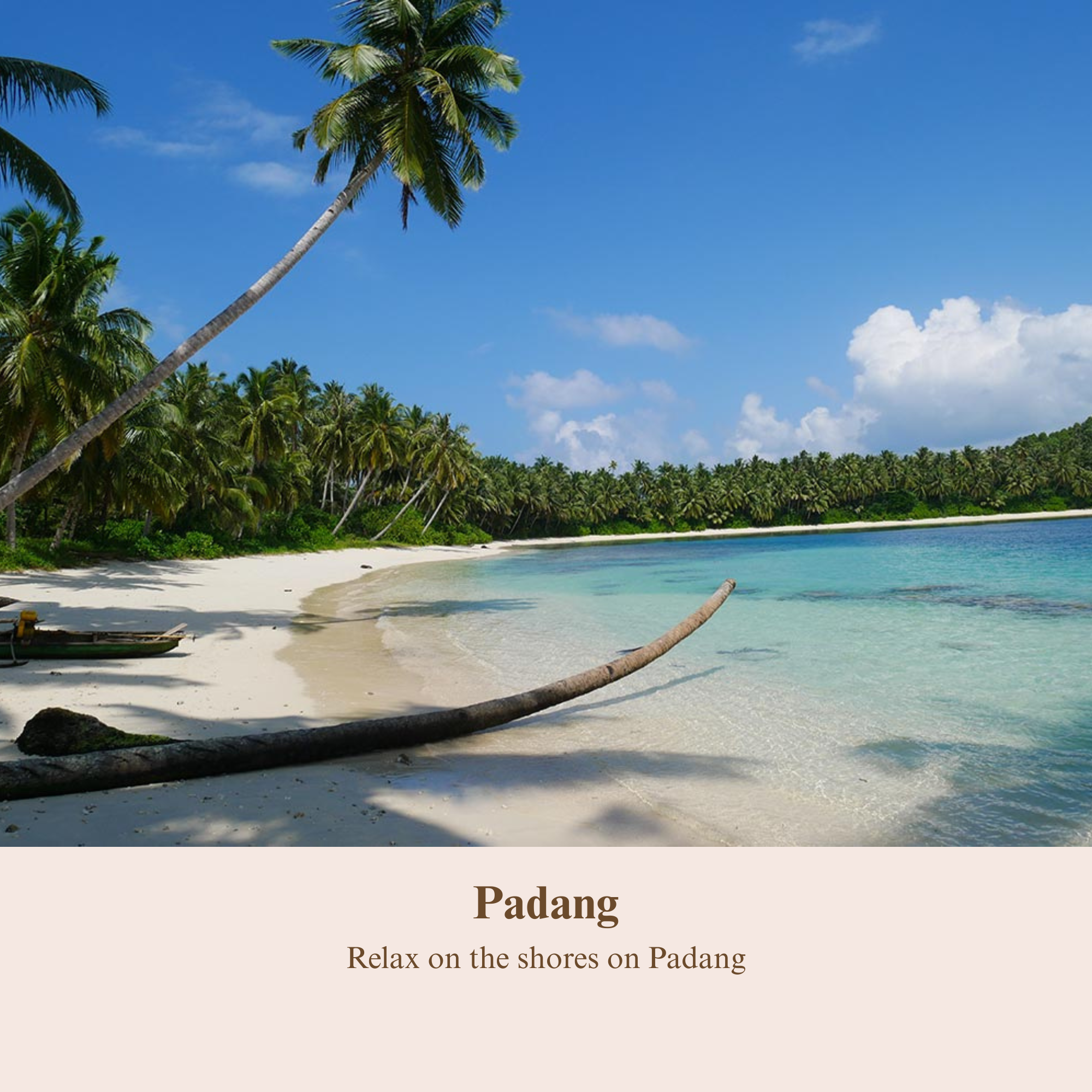
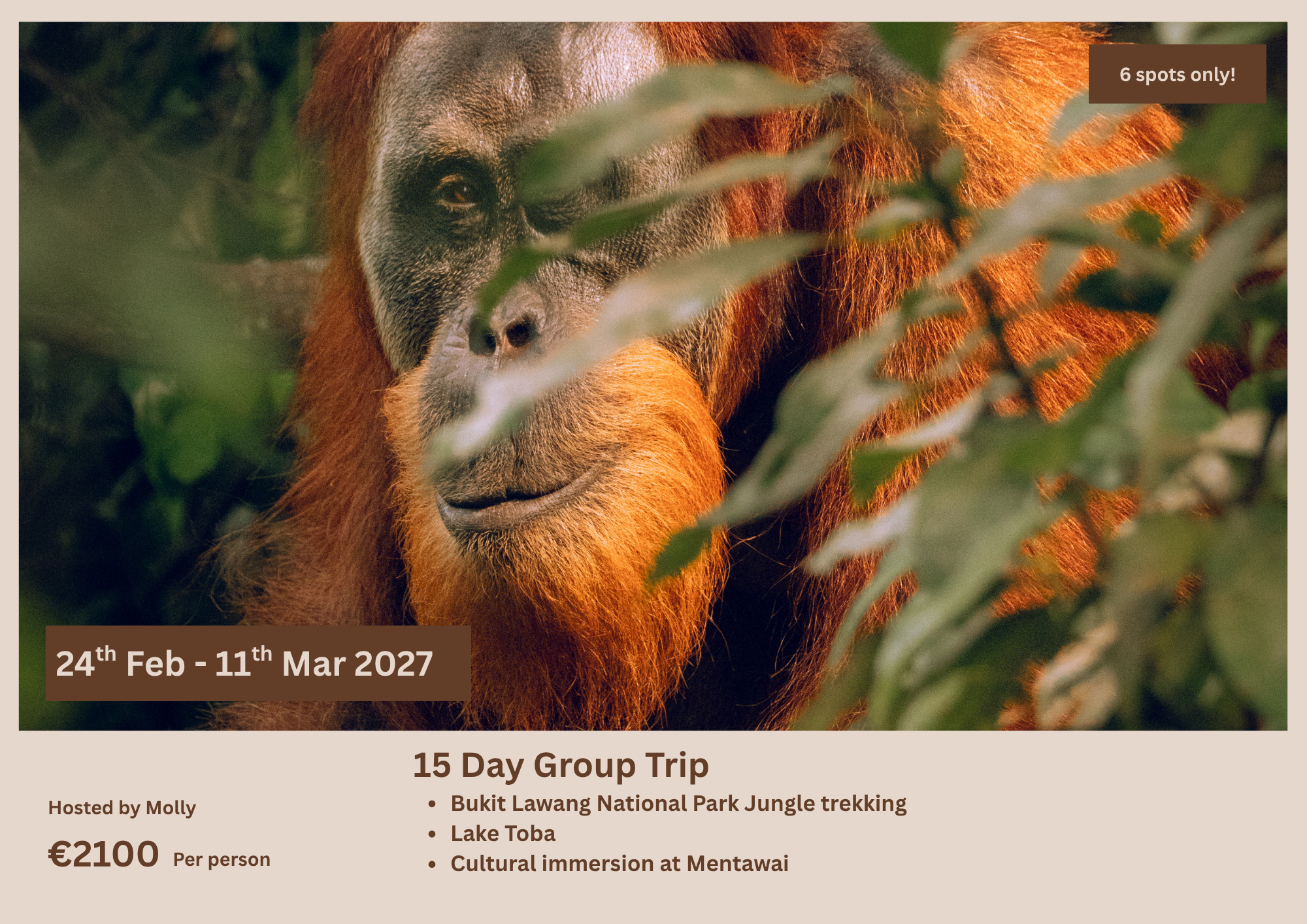
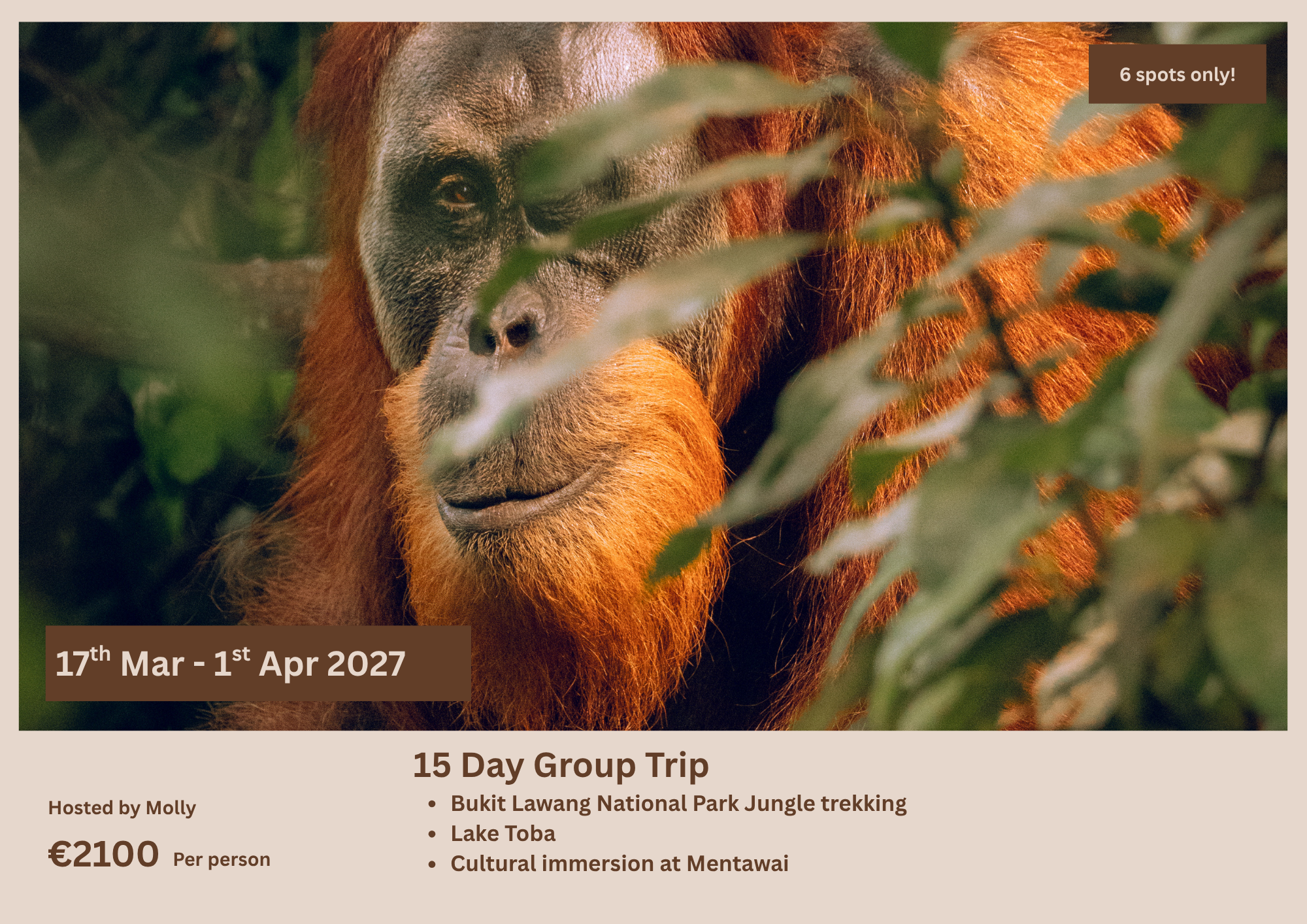
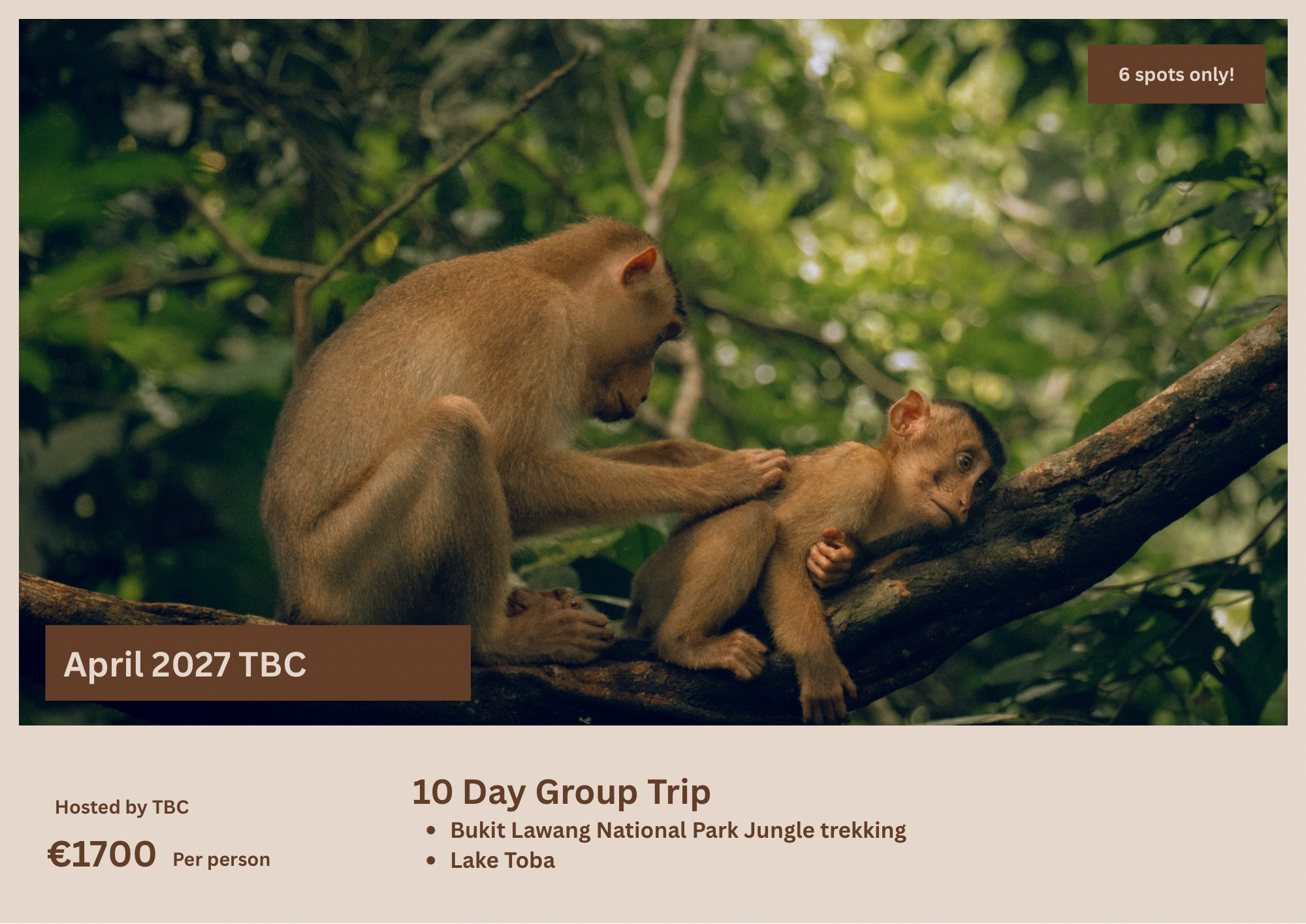
This is a 15 day small group trip through two of Indonesia's most extraordinary places — the rainforests of Sumatra and the Mentawai Islands off the west coast. We start in Bukit Lawang, the gateway to Gunung Leuser National Park, where we spend five days trekking deep into the jungle with licensed local guides and scouts. From there we make our way south through Sumatra, stopping at Lake Toba before continuing to Padang and crossing to the Mentawai Islands, where we spend four nights with an indigenous community. The trip ends back in Padang.
Below you'll find the day by day itinerary, the ethical framework behind how this trip is run, and everything you need to know before signing up.
DISCLAIMER
This is not a luxury trip.
You will go days without a shower — rivers only. You will carry your own pack, sleep in the jungle, and eat what the guides cook over a fire. There will be bugs. There will be leeches. There is no spa at the end of the day and no room service. If that sounds like a problem, this trip probably isn't for you.
If it sounds like exactly the point, welcome.
Highlights
Bukit Lawang & the jungle — what you need to know
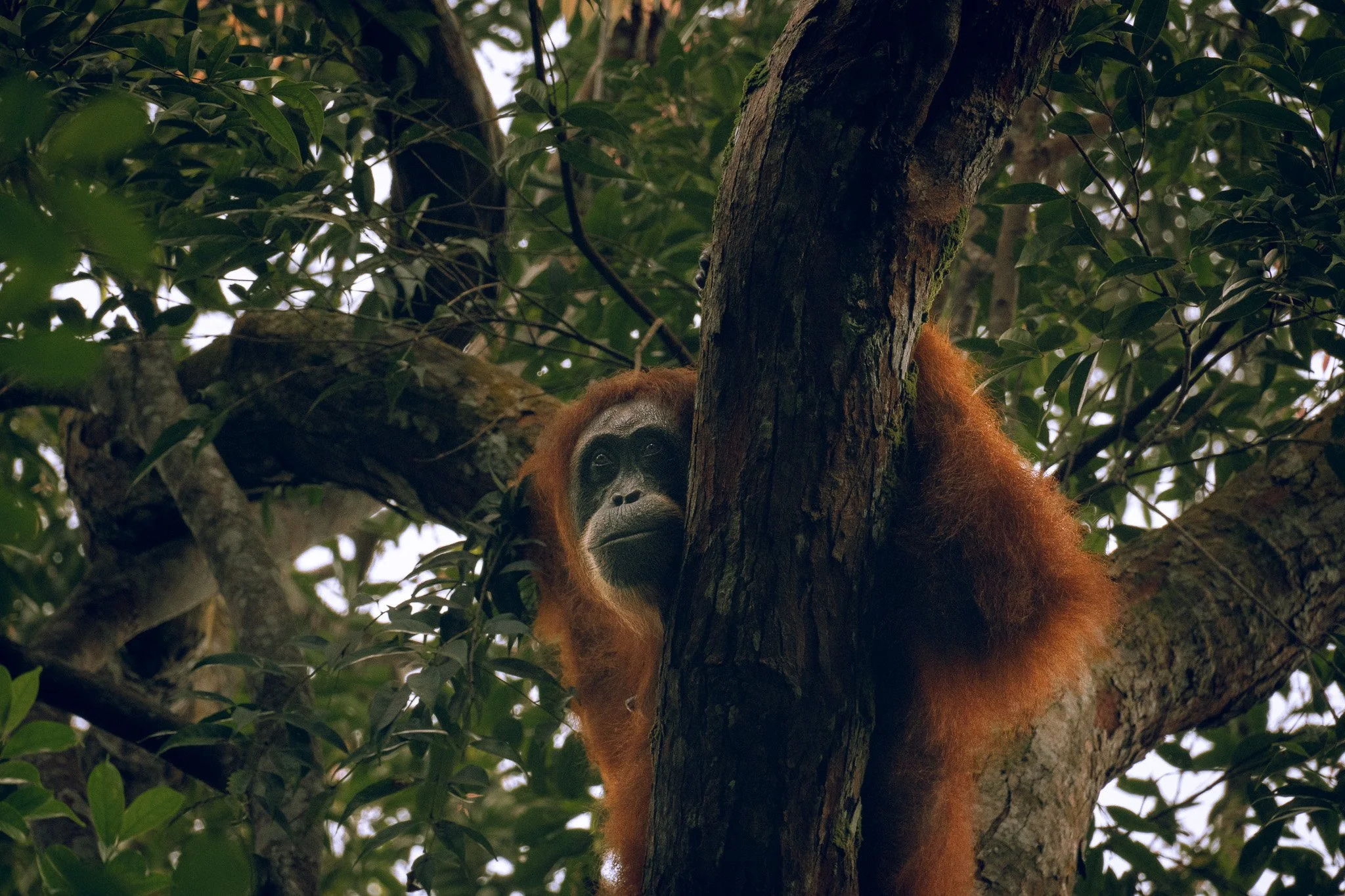
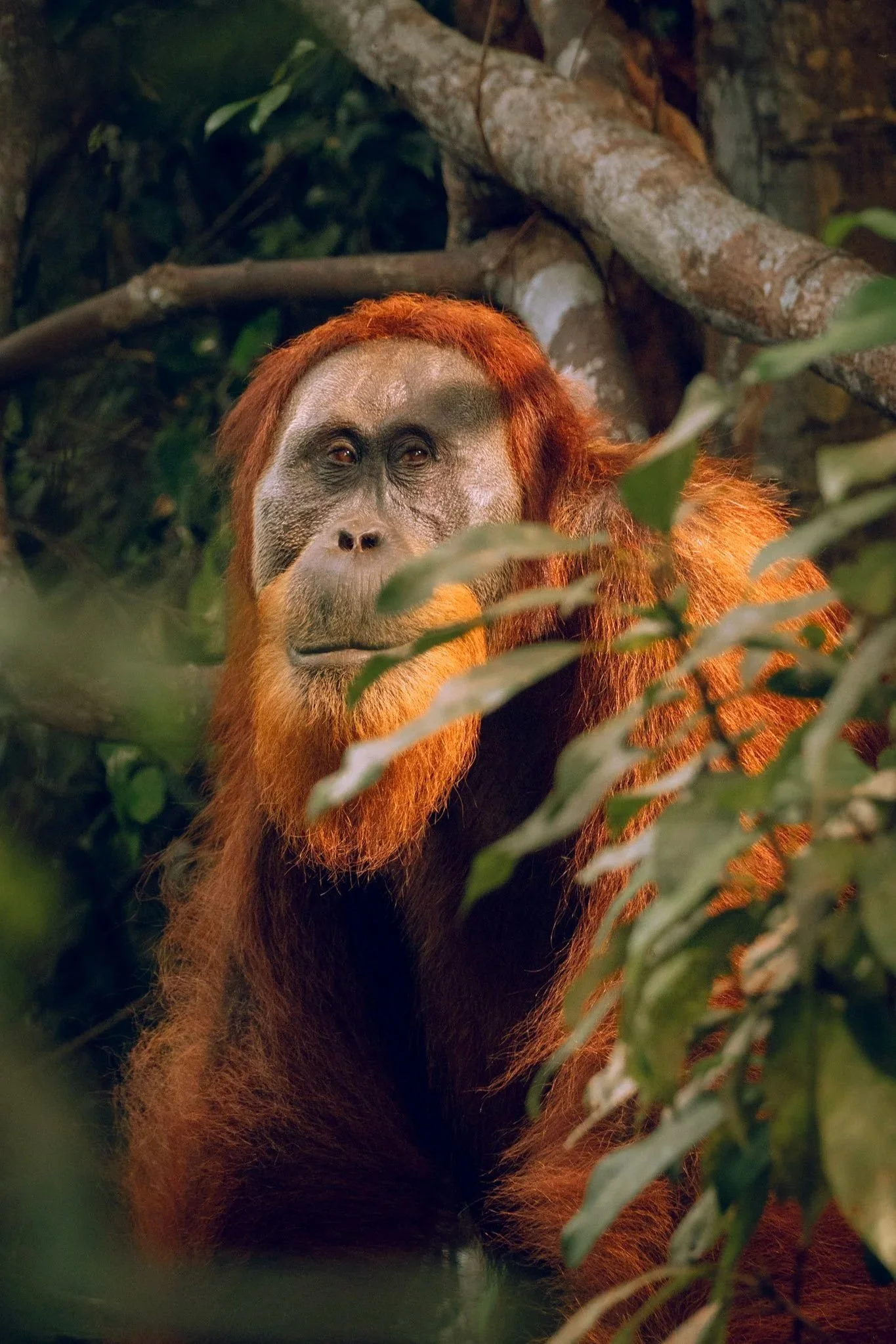
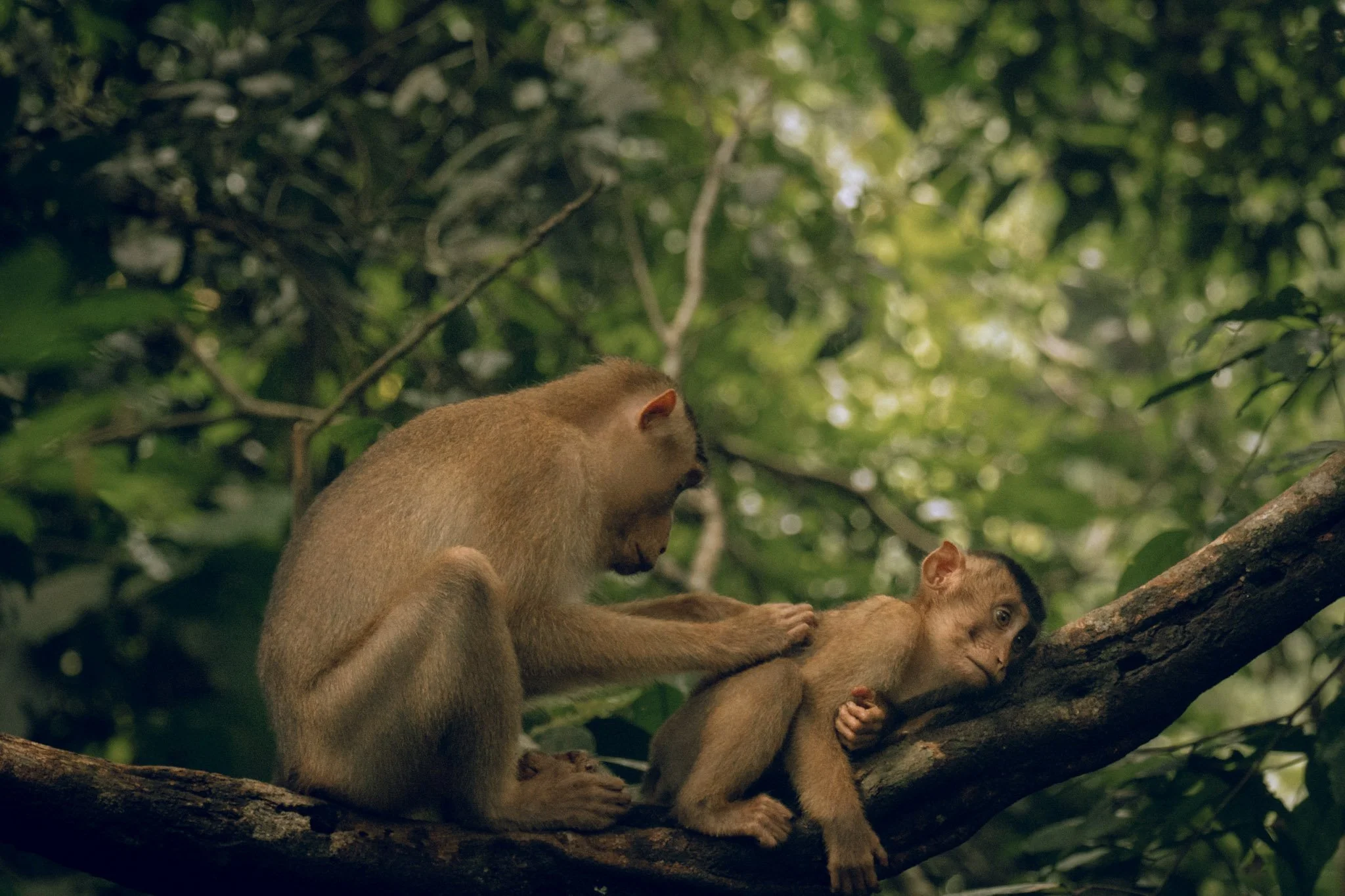
Bukit Lawang sits on the edge of Gunung Leuser National Park in North Sumatra — one of the last places on earth where orangutans, tigers, rhinos, and elephants still share the same rainforest. Because of that, it's strictly protected, and entering the jungle without a licensed guide is illegal.
Every guide operating here is required to be registered with the Indonesian Tourist Guide Association (HPI). That means completing official training, passing an exam, and renewing their certification every two years. It's not a formality — it's what separates people who actually know this jungle from people who just say they do. The guides on this trip are licensed, local, and have been doing this for years.
Why there are semi-wild orangutans here — and why that matters
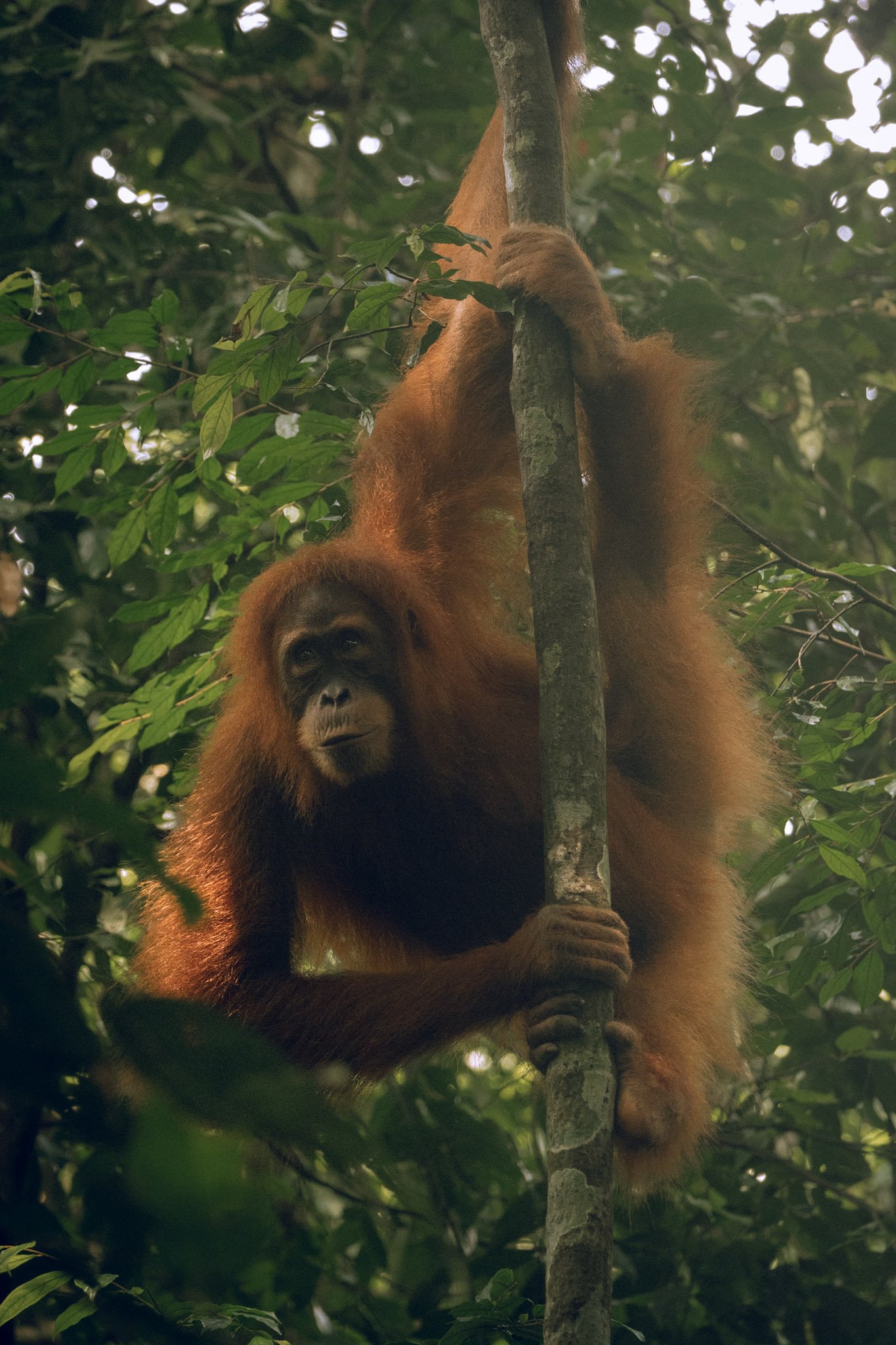
In 1973 two Swiss zoologists established a rehabilitation centre at Bukit Lawang, taking in orphaned and confiscated orangutans and teaching them the skills to survive in the wild. By the late 1990s the centre faced a difficult paradox — the very tourists who came to admire the orangutans were inadvertently putting them at risk. The centre closed in 2002 — the animals had become too dependent on human food and the risk of disease transmission was too high.
The orangutans you'll encounter are the descendants of those rehabilitated animals — already habituated to humans, which is why they're less afraid of us than truly wild ones would be. After the centre closed a feeding platform remained open, eventually misused for tourism purposes, causing orangutans to slowly lose their wild behaviour. That platform is also now closed.
Orangutans share 97% of human DNA, making them highly susceptible to human illnesses. You may get closer to one than you ever expected on this trek. That's not an invitation to feed or touch them. A good photo is not worth it. This is exactly why the licensed guide distinction matters — an unlicensed guide has no one to answer to. A licensed one does.
The scouts — and why they're part of this trip
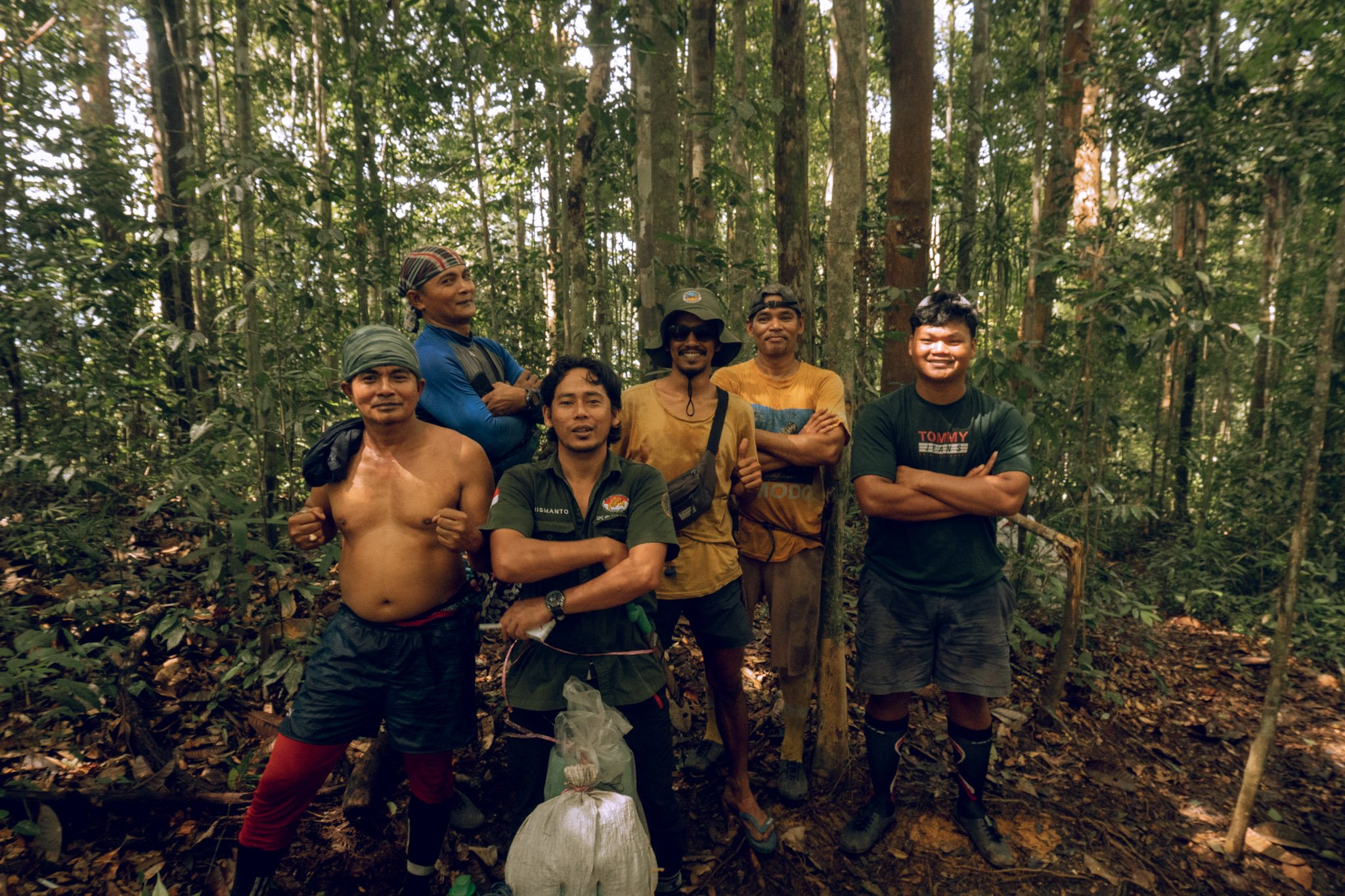
Permits are required to enter Gunung Leuser National Park, and on treks longer than four days, we are joined with scouts as well — and this is where the story gets a bit more interesting.
The scouts who join us on longer expeditions are former hunters and loggers. These are people who knew this jungle long before it was a national park, and who, for a long time, had no other way to survive than to take from it. Not because they wanted to destroy it — but because that was the only option available to them. Now, thanks to the guides I'm working with, they're employed as scouts on longer treks instead. Their knowledge of the jungle is genuinely unmatched. They know things no amount of training can teach. And now, rather than working against the forest, they're part of protecting it.
When you come on this trip, you're directly part of making that possible.
The Mentawai Islands — why we're going and how we're doing it
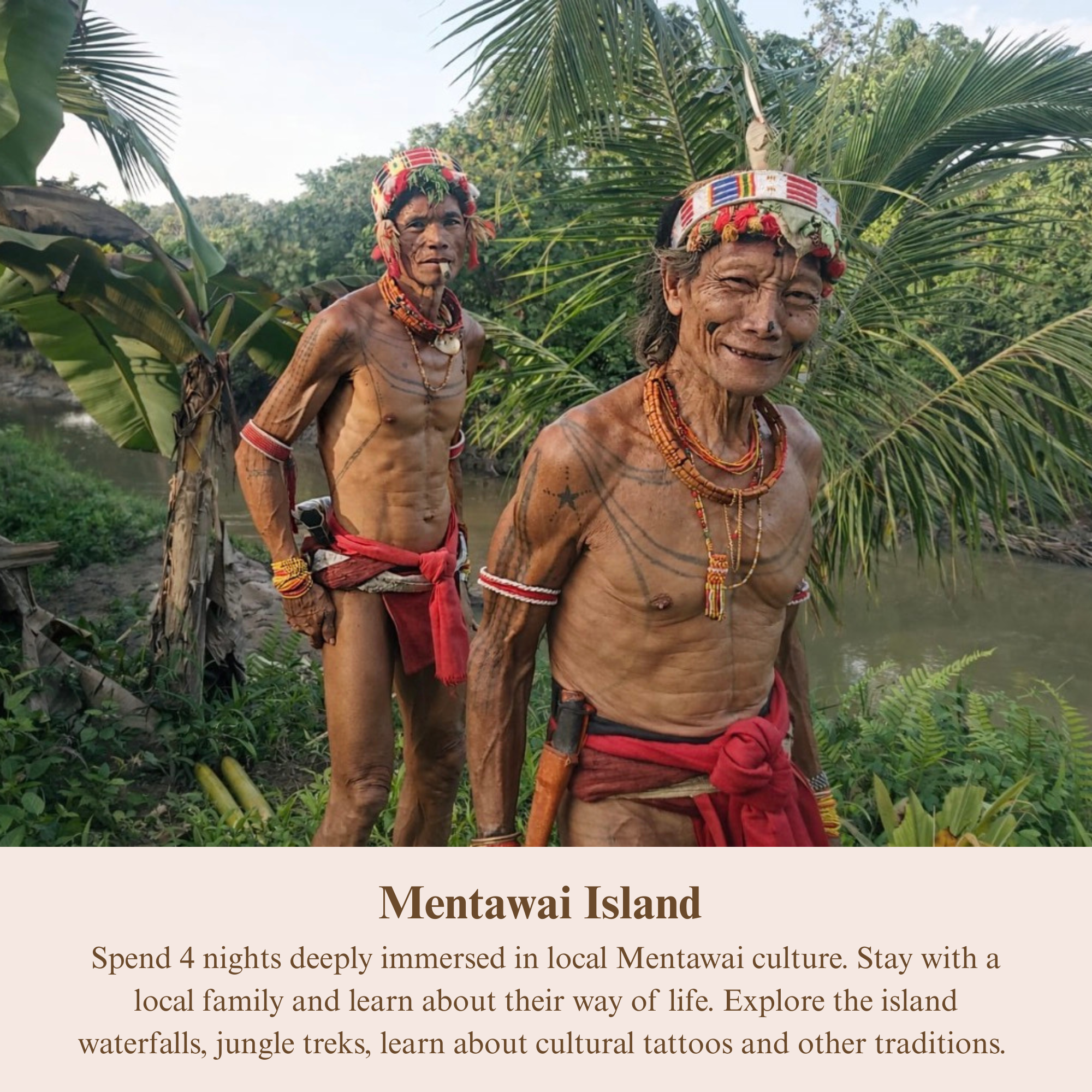
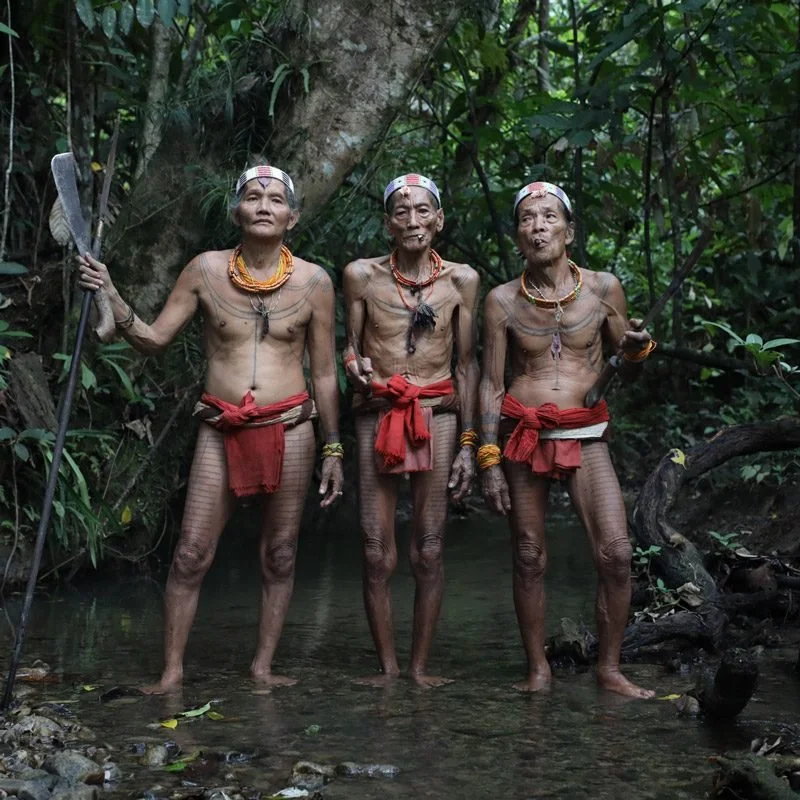
Off the western coast of Sumatra, the Mentawai Islands rise from the Indian Ocean in a patchwork of emerald forests and winding rivers. Among the indigenous Mentawai people, an ancestral belief system known as Arat Sabulungan shapes how the land is understood — every tree, river and animal is alive with spirits whose balance must be honoured. They are one of Indonesia's oldest indigenous communities, still holding tightly to traditions passed down through generations. This is not a place that exists for tourism. It's a place that has agreed, on its own terms, to share itself with a small number of respectful visitors.
Tourism here comes with real challenges — outside operators misrepresenting the culture, money not reaching local families, and local people struggling to tell their own stories. This trip is structured to work against that. The guide leading this portion was born and raised in the community we're visiting. Every element runs through local hands and the money stays in Mentawai.
Guests are briefed on customs before entering the village. There are no staged performances created for tourists — this is genuine insight into a way of life that continues despite many external pressures. Photography is welcomed but our guide sets the boundaries. As he put it: "I believe tourism should preserve our culture, protect our forests, and create opportunities for local people — not replace our voices."
Why all this matters to molsgonewild
I'll be honest — after travelling to 40+ countries I am always learning about responsible tourism. I only started sharing my adventures online at the end of 2025 and I'm still figuring out how to show up responsibly while actually having a positive impact on the places and people I visit. That line isn't always obvious, and I'm navigating it in real time like everyone else.
What I do know is where my values come from. Growing up in New Zealand, respect for the natural world isn't something you're taught — it's just how you live. It's in the way people talk about the land, the way communities protect it, the way you're raised to understand that you're a visitor in nature, not the other way around. That's the lens I bring to every place I travel.
Sumatra left a mark on me in a way I didn't expect. It's one of those places that gets under your skin. And because of that, I really wanted to go back.
I know some of you found me through a photo or a reel and thought — I want to do that. I get it. But I also want to be straight with you: this is someone's home. The jungle, the communities, the wildlife — none of it exists for our content. We're guests here, and this trip is built around making sure we show up like it.
And now I get to share it with some of you who have been following along — which honestly still feels a bit surreal. Not just the place itself, but the people. The local guides and scouts who taught me so much about this part of the world on my first trip are the ones who will be with us again. Getting to introduce you to them is, genuinely, the part I'm most excited about.
Your Questions, Answered
-
This trip involves multiple days of jungle trekking with a backpack, on uneven and often muddy terrain, in heat and humidity. You don't need to be an athlete, but you do need a reasonable baseline of fitness and the mental resilience to handle physical discomfort for several days at a time.
-
You are absolutely welcome to come as a vegan.
-
You'll fly into Kualanamu International Airport (KNO) in Medan, North Sumatra. The trip ends in Padang, so most people book a return flight out of Minangkabau International Airport (PDG) or connect back through Jakarta.
-
You can reach us anytime via our contact page or email. We aim to respond quickly—usually within one business day.
-
Most Western nationalities — including the US, UK, Canada, EU, and Australia — can get visa-free entry for 30 days or a visa on arrival for 30 days, extendable to 60 days.
The visa on arrival costs approximately $40 USD per person, payable in cash or card. Your passport needs at least six months validity from your arrival date, plus proof of an onward ticket. Always check the official site (evisa.imigrasi.go.id) closer to your travel date as requirements can change.
-
You will be sent a packing list with everything you need.
-
When we are in the jungle we will be sleeping under tarps on the ground. All bedding will be supplied.
When we are not in the jungle, we will be staying at different homestays. -
Very high, particularly on the first day of the trek where semi-wild orangutans are known to be near the park entrance. Sightings further into the jungle are not guaranteed but still likely — this is one of the best places on earth to see Sumatran orangutans in their natural habitat.
-
The cost of this group trip will cover everything. All food, acommodation, transport and transfers to the airport.
Your flights to and from Indonesia are not included.
The only extra money you will need is for your own personal shopping for snacks or souvenirs, or any extra drinks with our meals. -
As a general rule for travel to Southeast Asia, it's recommended to have immunisations for diphtheria, hepatitis A, tetanus, yellow fever, and typhoid.
Rabies vaccination is recommended if you're trekking in the jungle or likely to have contact with wild animals. Speak to a travel clinic at least 4-6 weeks before departure, as some vaccines require multiple doses spread over time. This is general guidance, not medical advice — please consult a travel health professional for what's right for you. -
We will carry first aid kits into the jungle.
If anyone seriously injures themself the remoteness of where we will will make it difficult to get medical help right away. Guides will assist getting anyone with a serious injury back into the village where further help will be waiting.
Individual travel insurance covering this - is mandatory -
Well it ain’t glamorous!
There are no toilets once we're in the jungle — you'll be going outdoors, away from the camp. We will bring our own toilet paper and a small bag to pack out any rubbish (wrappers, sanitary products, etc.) — nothing gets left behind. It's a normal part of jungle trekking and you'll get used to it quickly.